
Hockey Weight Training for Kids: A Practical Guide
Table of Contents
- Why Hockey Weight Training for Kids Matters
- Age-Appropriate Readiness and Safety Foundations
- Youth Hockey Strength Training: Building the Foundation
- Hockey Exercises for Kids at Home
- Youth Hockey Conditioning Program: Building Endurance and Power
- Hockey Agility Drills for Kids: Speed and Change of Direction
- Warm-Ups, Mobility, and Injury Prevention
- Measuring Progress Without Overemphasizing Performance
- Frequently Asked Questions
Last Updated: October 11, 2026
Why Hockey Weight Training for Kids Matters
Hockey weight training for kids isn't just about building muscle. It's about creating the foundation for a faster, more powerful shot and better on-ice performance.
The challenge is knowing where to start. Most youth hockey players focus entirely on ice time. They skate, they shoot, they play games. But the real gains come from what happens off the ice.
The pattern is clear: kids who combine ice training with structured off-ice work outpace their peers. The good news? You don't need a fancy gym. Bodyweight exercises, resistance bands, and simple stick weights can transform a player's game in just a few months.
Age-Appropriate Readiness and Safety Foundations
Before any young player starts hockey weight training for kids, safety comes first. Kids under 8 should focus on movement patterns and coordination. Ages 8-12 can begin light resistance work.
The key is proper form over heavy weight. A 10-year-old doing 15 perfect push-ups learns more than one doing 5 sloppy ones.
Always supervise youth hockey training sessions. Watch for signs of fatigue or poor form. If a young player can't complete a movement with control, reduce the difficulty. Rest days matter just as much as training days.
Youth Hockey Strength Training: Building the Foundation
Effective youth hockey strength training focuses on four key areas: legs, core, upper body, and power. Each area directly supports on-ice performance. Stronger legs drive faster skating. A solid core improves balance during puck battles. Upper-body strength powers your shot.
Lower-Body and Leg Strength
Leg strength determines skating speed and agility. Young hockey players need strong quads, hamstrings, and glutes to push hard off the ice and change direction quickly.
Start with these bodyweight exercises:
- Squats: Stand with feet shoulder-width apart. Lower your body as if sitting into a chair. Keep your chest up and knees tracking over your toes. Perform 3 sets of 12-15 reps.
- Lunges: Step forward, lower your back knee toward the ground, then push back to standing. Alternate legs. Perform 3 sets of 10 reps per leg.
- Single-leg stands: Balance on one leg for 30 seconds. This builds ankle stability. Perform 3 sets per leg.
Add resistance bands for extra challenge. Loop a band around your legs just above the knees. Perform squats and lateral walks with the band creating tension. This mimics the muscle activation needed for powerful skating strides.
Core Strength and Stability
A strong core keeps young hockey players upright during puck battles and improves balance on the ice. Core work also protects the lower back during intense training.
Effective core exercises include:
- Planks: Hold a push-up position with forearms on the ground. Keep your body in a straight line from head to heels. Hold for 30-45 seconds. Perform 3 sets.
- Dead bugs: Lie on your back. Extend one arm overhead while straightening the opposite leg. Return to center and switch sides. Perform 3 sets of 10 reps per side.
- Bird dogs: Start on hands and knees. Extend one arm forward and the opposite leg backward. Hold for 2 seconds. Return and switch sides. Perform 3 sets of 10 reps per side.
These movements build the stability needed for powerful shots and quick direction changes.
Upper-Body Strength Exercises
Upper-body strength directly translates to shot velocity. Young players with stronger shoulders, chest, and arms deliver harder, faster shots.
Key upper-body movements:
- Push-ups: Start in a plank position. Lower your body until your chest nearly touches the ground. Push back up. Perform 3 sets of 8-12 reps. Modify on knees if needed.
- Resistance band rows: Loop a band around a sturdy object at chest height. Pull the band toward your torso, squeezing your shoulder blades together. Perform 3 sets of 12 reps.
- Dumbbell rows: Hold a light dumbbell in one hand. Row it up to your ribcage, then lower. Perform 3 sets of 10 reps per side.
These exercises build the pulling and pushing strength needed for powerful, accurate shots.
Hockey Exercises for Kids at Home
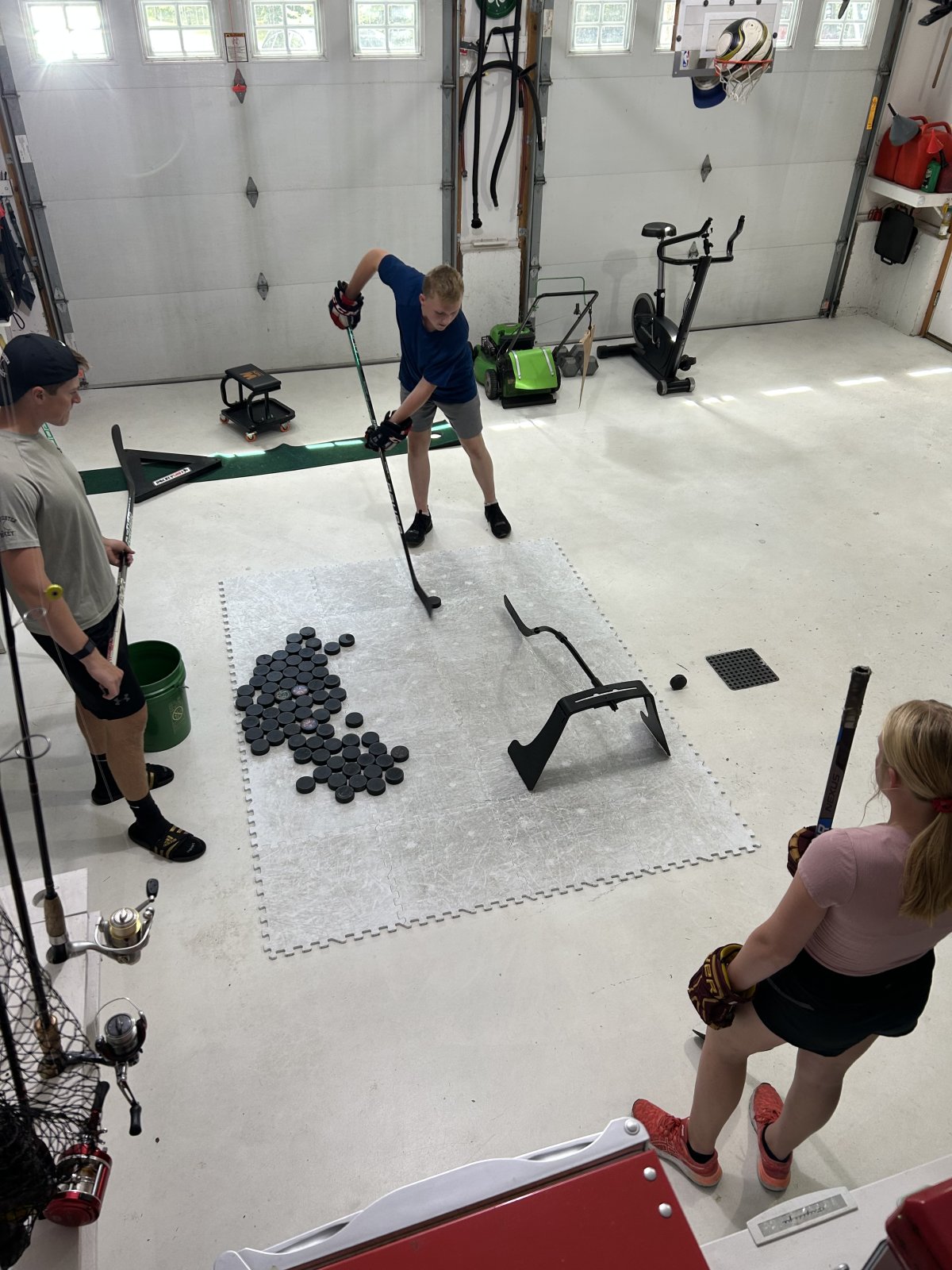
The best training happens consistently. Home workouts remove barriers to consistency. No commute. No facility fees. Just dedicated time and basic equipment.
Bodyweight Exercises and Minimal Equipment
You need almost nothing to start. Your living room becomes your training space.
Essential home exercises:
- Burpees: Squat down, place hands on ground, jump feet back into plank, jump feet forward, stand and jump. Perform 3 sets of 8-10 reps.
- Mountain climbers: In plank position, drive knees toward chest alternately. Move quickly for 30-45 seconds. Perform 3 sets.
- Jump squats: Perform a squat, then explode upward. Land softly and repeat. Perform 3 sets of 10 reps.
Add a resistance band set. Bands cost under $20 and enable dozens of exercises. They're portable, durable, and perfect for youth hockey conditioning.
Off-Ice Strength Training with Stick Weights
Stick weights are game-changers for hockey players. They add resistance directly to your stick, mimicking the feel of shooting while building strength.
The Lamplighter Hockey Stick Weight slides into your stick's shaft.
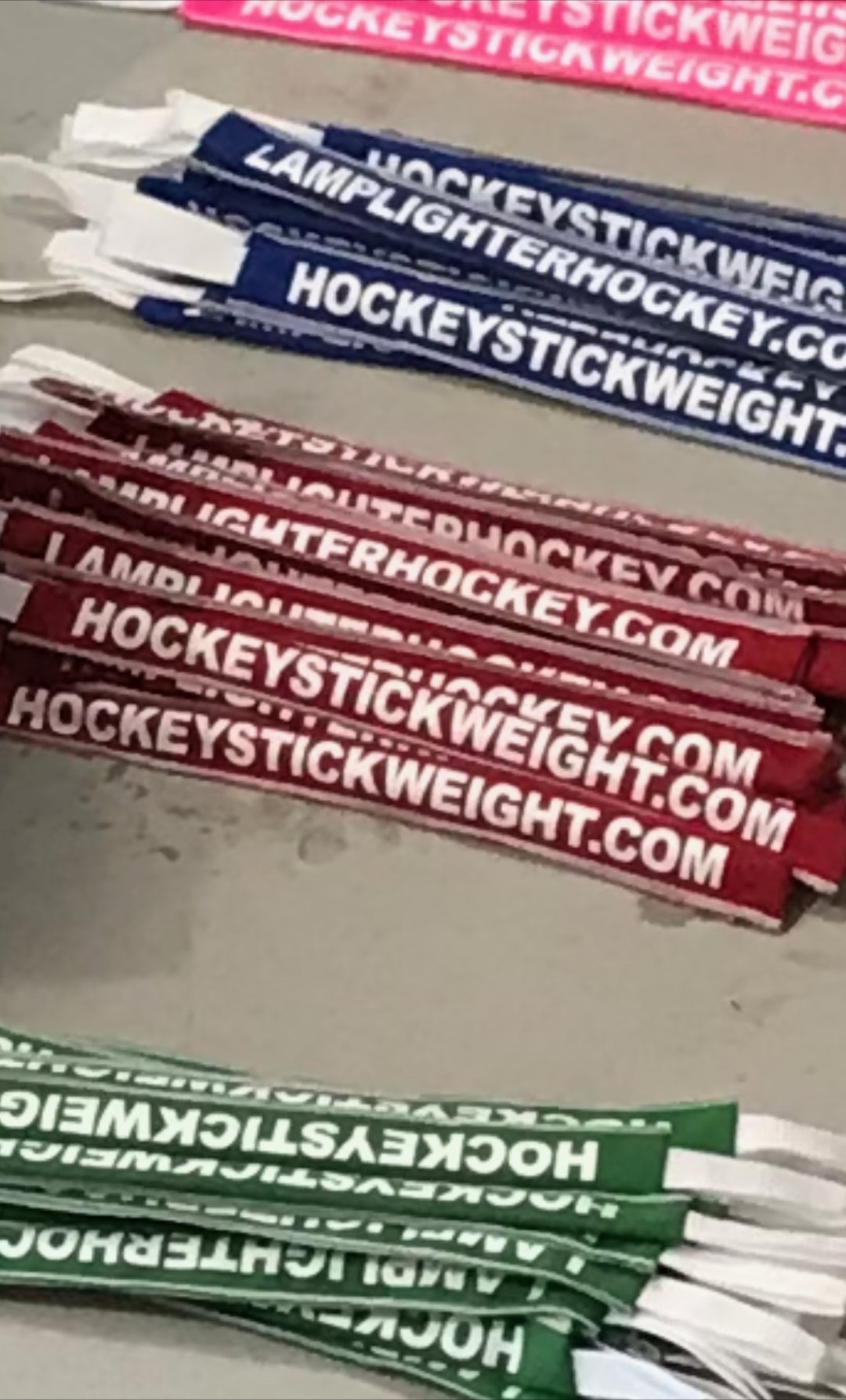
Lamplighter Hockey Stick Weight (available in 3 sizes)
One parent shared that her 15-year-old son increased his shot velocity by 10 km per hour after consistent training with the stick weight.
The stick weight costs $45 for the standard 1-pound version. Teams can order in bulk at $479.88 for a full set, making it affordable for group training.
Youth Hockey Conditioning Program: Building Endurance and Power
Hockey conditioning isn't just running laps. It's building the specific endurance and power needed for explosive skating and shooting throughout a full game.
Lamplighter Hockey Stick Weight (available in 3 sizes) →
In-Season Versus Off-Season Training
Off-season training (May through August) builds the strength foundation. Focus on heavier resistance and lower reps. This is when you gain raw strength.
In-season training (September through March) maintains strength while emphasizing power and conditioning. Lighter weights, higher reps, and more explosive movements keep players sharp without overloading tired muscles.
A sample off-season week:
- Monday: Lower-body strength (squats, lunges, single-leg work)
- Tuesday: Upper-body and core
- Wednesday: Rest or light mobility work
- Thursday: Lower-body and plyometrics
- Friday: Upper-body power and conditioning
- Saturday: Sport-specific drills (shooting, stick handling with stick weights)
- Sunday: Rest
In-season, reduce volume by 30 percent. Prioritize technique and power over building new strength.
Training Frequency and Recovery
Young players need recovery. Growth happens during rest, not during the workout. Most youth hockey players benefit from 3-4 strength sessions per week.
Never train the same muscle groups on consecutive days. Alternate upper and lower body. This allows muscles to recover while maintaining consistent training frequency.
Sleep is non-negotiable. Kids need 8-10 hours per night for proper recovery and growth. Nutrition matters too. Adequate protein supports muscle development. Hydration keeps performance high.
Training Day |
Focus Area |
Duration |
Recovery Need |
|---|---|---|---|
Monday |
Lower-body strength |
30-40 minutes |
48 hours before next lower-body work |
Tuesday |
Upper-body strength |
30-40 minutes |
48 hours before next upper-body work |
Wednesday |
Rest or mobility |
15-20 minutes |
Active recovery only |
Thursday |
Lower-body power |
30-40 minutes |
48 hours rest before next session |
Friday |
Upper-body power |
30-40 minutes |
48 hours rest before next session |
Saturday |
Sport-specific drills |
45-60 minutes |
24 hours rest minimum |
Sunday |
Complete rest |
, |
Full recovery day |
Hockey Agility Drills for Kids: Speed and Change of Direction
Raw strength means nothing without speed and agility. Hockey demands quick direction changes, explosive starts, and rapid deceleration. Agility work trains these movements.
Agility Ladder and Footwork Drills
An agility ladder costs $15-25 and transforms footwork training. Set it on the ground and perform these drills:
- Quick feet: Run through the ladder as fast as possible, placing one foot in each square. Perform 3 sets of 2 passes through.
- Lateral shuffle: Shuffle sideways through the ladder, staying low. Perform 3 sets of 2 passes per direction.
- In-and-out: Step one foot in the square, one foot outside, alternating. Perform 3 sets of 2 passes.
These drills build foot speed and coordination. They teach kids to move explosively while maintaining control. Perfect for improving on-ice agility.
Plyometrics and Jumping Drills
Plyometric exercises build explosive power. Young players who jump and hop develop the fast-twitch muscle fibers needed for powerful skating starts.
Key plyometric movements:
- Box jumps: Jump onto a low box or step. Step down and repeat. Perform 3 sets of 6-8 reps.
- Hurdle hops: Set up 4-6 small hurdles or cones. Hop over each one quickly. Perform 3 sets of 2 passes through.
- Bounding: Take exaggerated running strides, focusing on distance and height. Perform 3 sets of 20 meters.
Start with low heights and short distances. Plyometrics are intense. Proper progression prevents injury.
Warm-Ups, Mobility, and Injury Prevention
Every training session starts with a proper warm-up. Five minutes of light activity gets blood flowing and prepares muscles for work.
Effective warm-up:
- 2 minutes of light jogging or jumping jacks
- 30 seconds of arm circles
- 10 bodyweight squats
- 10 leg swings per leg
- 5 push-ups
Follow training with mobility work. Young hockey players spend hours on the ice in a forward-skating position. This creates tightness in hip flexors and lower back.
Post-training mobility:
- Quad stretches: 30 seconds per leg
- Hip flexor stretches: 30 seconds per leg
- Hamstring stretches: 30 seconds per leg
- Shoulder stretches: 30 seconds per arm
Hold each stretch without bouncing. Breathe deeply. Mobility work prevents injury and improves on-ice movement.
Measuring Progress Without Overemphasizing Performance
Track improvements without obsessing over numbers. Young players benefit from seeing progress, but excessive focus on metrics creates pressure.
Simple tracking methods:
- Reps completed: How many push-ups can you do in one set? Track weekly.
- Time held: How long can you hold a plank? Add 5-10 seconds per week.
- Speed drills: Time agility ladder runs. Aim for small improvements every 2-3 weeks.
- Shot velocity: Use a radar gun occasionally (not every session).
The real measure is on-ice performance. Is the player faster? Stronger in puck battles? More confident shooting? These matter more than any number.
Hockey weight training for kids works. Consistent off-ice strength work translates directly to faster skating, harder shots, and better on-ice confidence. Start with bodyweight exercises and basic equipment. Progress gradually. Focus on proper form over heavy resistance. Get started with age-appropriate strength training guidelines from USA Hockey to ensure your young player trains safely and effectively.
Frequently Asked Questions
Is weight training safe for kids who play hockey?
Yes, hockey weight training for kids is safe when done with proper technique, appropriate loads, and adult supervision. Children as young as 8 can begin bodyweight exercises and resistance training using light weights or bands. The key is starting with foundational movements, focusing on form over load, and progressively increasing intensity. Always warm up thoroughly, avoid maximum lifts, and ensure a qualified adult supervises sessions. Proper technique prevents injury and builds healthy training habits.
At what age can a child start youth hockey strength training?
Children can begin basic youth hockey strength training around age 8 with bodyweight exercises like push-ups, squats, and planks. Ages 10-12 can introduce light resistance bands and dumbbells under supervision. Ages 13+ can progress to heavier weights with proper instruction. Always prioritize movement quality over weight. Begin with 2-3 sessions per week, 20-30 minutes each, and allow at least one rest day between sessions. Consult a coach or trainer to ensure age-appropriate progression.
Can kids build hockey strength without lifting weights?
Absolutely. Bodyweight exercises are highly effective for building hockey strength in kids. Push-ups, pull-ups, squats, lunges, planks, and plyometric drills develop power, stability, and endurance without equipment. Resistance bands add variety and progressive challenge at minimal cost. Many competitive young players build significant strength using home workouts and bodyweight training. The Lamplighter Hockey Stick Weight adds realistic resistance to shooting and stick-handling drills, simulating game conditions while building upper-body strength using the player's own equipment.
How many days a week should kids do hockey weight training?
Young hockey players should train 2-3 days per week during off-season, with at least one rest day between sessions. During the competitive season, reduce to 1-2 sessions weekly focused on maintenance and injury prevention. Sessions should last 20-40 minutes depending on age and intensity. Combine strength work with conditioning, agility drills, and skill development. Recovery is as important as training; adequate sleep, hydration, and nutrition support adaptation and prevent overuse injuries.