
Best Hockey Stick Weights for Youth Players: 2026 Guide
Table of Contents
- Why Stick Weight Matters for Young Players
- Recommended Stick Weight Ranges by Age and Stick Category
- How to Choose a Youth Hockey Stick Weight
- Weighted Hockey Stick Training: Building Wrist and Forearm Strength
- Weighted Puck vs Stick Weight: Which Builds a Harder Shot?
- Hockey Stick Weight Safety for Young Players
- Weight vs Balance: Protecting Swing Feel and Durability
- Which Lamplighter Stick Weight Fits Your Player?
- Frequently Asked Questions
Last Updated: October 21, 2026
Why Stick Weight Matters for Young Players
A stick that feels heavy in a nine-year-old's hands changes everything about how they shoot. At Lamplighter Hockey, we have spent years watching young players develop, and the pattern is consistent: light sticks teach bad habits when a player lacks the strength to load them properly.

Added weight forces the muscles in the wrists, forearms, and shoulders to work harder during every repetition. That resistance builds strength that transfers directly to game situations. When the weight comes out, the stick feels lighter and the shot releases faster.
How Added Weight Affects Shot Speed and Quick Hands
Weight slows the stick down during training, which is exactly the goal. A player who can move a weighted stick through a shooting motion builds the muscle memory and forearm strength to snap an unweighted stick through the same motion with more speed.
The trade-off is real, though. Too much weight too early teaches a player to drag the stick rather than whip it. That is why matching weight to age and strength matters more than buying the heaviest option available.
Recommended Stick Weight Ranges by Age and Stick Category
There is no single correct weight for every young player, but there are sensible ranges tied to age, height, and stick category. The table below is a starting point, not a prescription. Use it to pick a first size, then adjust for the individual player's build and strength.
Age Group |
Typical Height |
Stick Category |
Starting Weight |
Why It Fits |
|---|---|---|---|---|
8U / Mite |
Under 4'6" |
Youth |
1/2 pound |
Builds feel without breaking mechanics |
10U / Squirt |
4'4"-4'10" |
Youth |
1/2 to 1 pound |
Adds resistance as strength develops |
12U / PeeWee |
4'8"-5'2" |
Junior |
1 pound |
Matches growing forearm and wrist strength |
14U / Bantam |
5'0"-5'6" |
Intermediate |
1 to 2 pounds |
Supports power and shot-speed work |
16U+ / Midget |
5'4" and up |
Intermediate/Senior |
2 pounds |
For stronger players training for velocity |
Height matters as much as birth year because stick length and flex scale with the player's frame. A tall 11-year-old on an intermediate stick may handle more weight than a smaller 13-year-old on a junior stick.
Youth, Junior, and Intermediate Stick Categories Explained
Youth sticks are the shortest and lightest, built for players roughly 8 and under. Junior sticks fit players around 9 to 12 and sit between youth and intermediate in length and flex. Intermediate sticks serve players roughly 13 to 15 who have outgrown junior sizing but are not yet ready for senior sticks.
Weight recommendations should track these categories, not just birth year. The category tells you what the stick can safely carry; the player's strength tells you where to start within the range.
How to Compare Listed Weights Fairly
Manufacturer specs are not always apples to apples. Some list stick weight bare, some include the blade, and some include tape or a grip. Before you compare two sticks, or compare a stick to a training weight, confirm what the number includes.
A simple method:
- Weigh the player's current stick bare on a kitchen scale.
- Weigh it again with tape and grip as the player actually uses it.
- Note the difference, that is the weight the player already feels.
- Add the training weight to the taped number to estimate total swing weight.
This keeps comparisons honest across brands and across youth, junior, and intermediate models, where listed specs can vary by an ounce or more for reasons that have nothing to do with performance.
How to Choose a Youth Hockey Stick Weight
Start with the player's age and stick category, then test the weight in a real training session before committing. A properly chosen weight lets a young player complete shooting and stick-handling drills with clean mechanics.
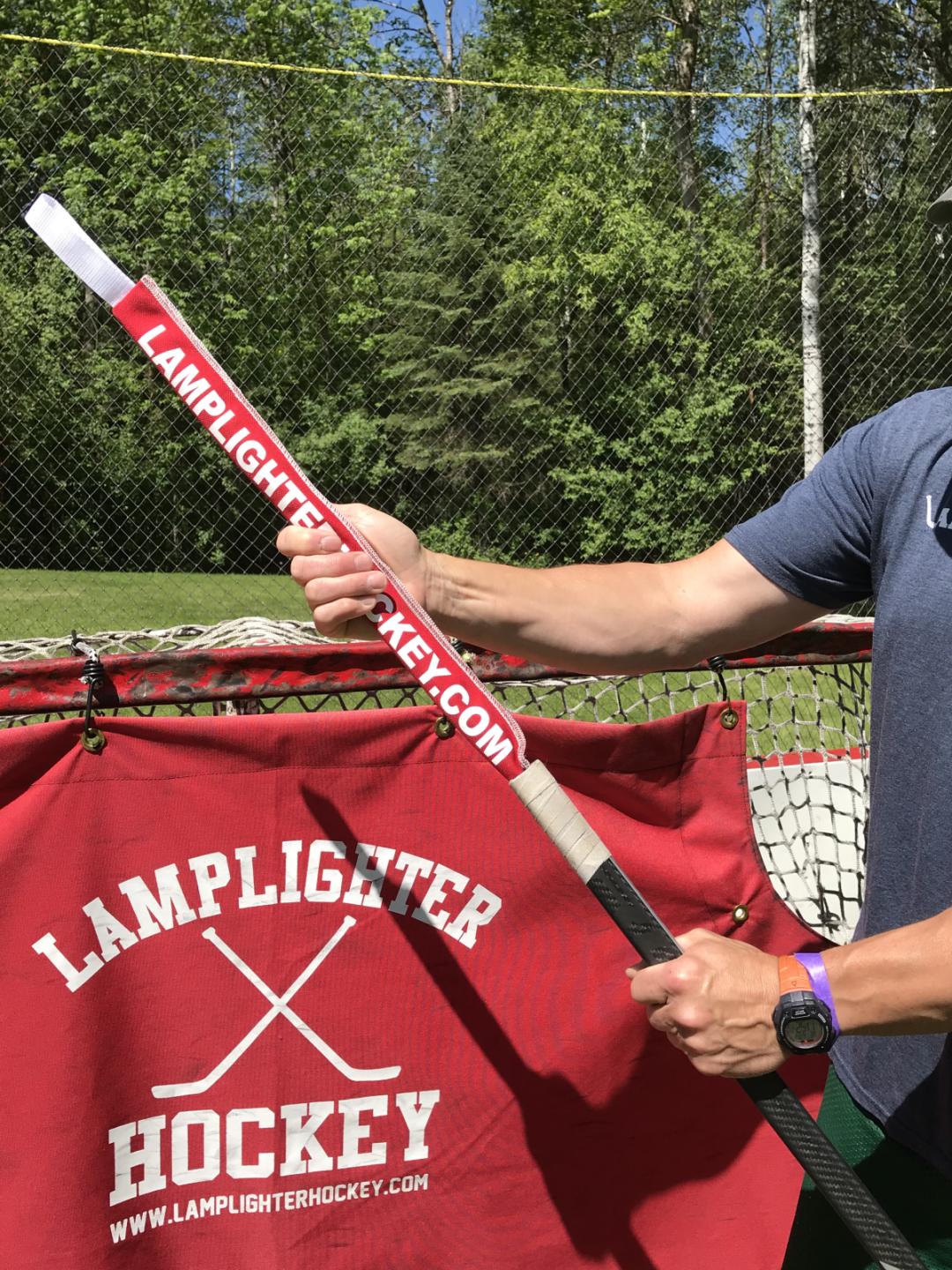
Here is the checklist we walk parents and coaches through:
- Confirm the player's stick category (youth, junior, or intermediate)
- Match weight to age using the range table above
- Insert the weight and run 10 to 15 practice shots
- Watch for dropped hands, dragging, or collapsed mechanics
- Drop one weight size if technique breaks down
- Confirm the weight fits securely with no rattle in the shaft
The Lamplighter Hockey Stick Weight slides into most junior, intermediate, and senior sticks with no tape or tools, so testing a size takes seconds.
Weighted Hockey Stick Training: Building Wrist and Forearm Strength
Weighted hockey stick training works best as a short, focused part of a practice routine, not an all-day burden. Ten to fifteen minutes of shooting and stick handling drills with the weight in place builds wrist and forearm strength without overloading a young player. The resistance trains the exact muscles used in the release, which is why it transfers to shot speed better than general strength work alone.
Consistency beats intensity here. A few focused sessions each week throughout the season will do more for a young player's shot than occasional heavy sessions that leave them sore and discouraged.
Weighted Puck vs Stick Weight: Which Builds a Harder Shot?
Both tools build shot strength, but they train different things. A weighted puck overloads the shooting motion itself, forcing the player to drive through the puck with more force.
Lamplighter Hockey Stick Weight (available in 3 sizes) →
For young players, stick weight offers more flexibility because it trains stick handling and shooting in the same session. A weighted puck is a useful supplement for shooting-specific power work. Many coaches combine both, using the stick weight for all-around skill development and the weighted puck for dedicated shot training.
Hockey Stick Weight Safety for Young Players
Hockey stick weight safety comes down to three rules: match the load to the player, keep sessions short, and never let a young player train through pain. Growing bodies need time to recover, and a weight that is too heavy for a player's strength invites strain in the wrists, elbows, and shoulders.
Watch for these signs that it is time to drop a size:
- The player's hands drop during the shooting motion
- The stick drags instead of snapping through the release
- Soreness in the wrists or forearms lingers past a day
- Technique falls apart within a few repetitions
Weight vs Balance: Protecting Swing Feel and Durability
Adding weight changes how a stick feels, and balance matters as much as the number on the label. A stick's balance point, where it rests level on a finger or a table edge, tells you whether the weight sits toward the hands or toward the blade. A weight that sits poorly in the shaft makes the stick feel tip-heavy, which throws off the natural swing and can hurt technique. A well-designed weight distributes resistance evenly so the stick still moves the way the player expects.
A Simple Balance Test
You can compare two setups in under a minute:
- Lay the stick across a table edge and slide it until it balances.
- Mark that point with a piece of tape.
- Repeat with the training weight installed.
- Compare where the balance point moved.
A small shift toward the blade makes the stick feel heavier in the hands even when the scale weight barely changes. That perceived weight is what the player actually swings, so it is the number that matters for handling and quick hands.
Weight, Durability, and Price Trade-offs
Lighter sticks are usually built with thinner walls and less material, which can mean less durability for a young player who is hard on gear. Heavier or reinforced sticks tend to last longer but cost more and swing slower. The practical framework for families:
- If the player is rough on sticks and plays a long season, favor durability and accept a slightly heavier stick.
- If the player is working on quick hands and release, favor a lighter stick and protect it with a training weight rather than a heavier game stick.
- If budget is tight, a mid-weight stick plus a well-matched training weight often delivers more improvement per dollar than a premium ultralight stick.
Balance and durability together decide whether a weight becomes a season-long training partner or a drawer-bound disappointment. Test the balance point before you commit, and match the load to the player's strength rather than to the heaviest option on the shelf.
Which Lamplighter Stick Weight Fits Your Player?
Matching weight to the player is the whole game. Here is how our three sizes line up for youth and junior players:
Product |
Weight |
Best For |
|
|---|---|---|---|
Lamplighter Hockey Stick Weight (1/2 pound) |
1/2 lb |
8U and Mite players |
|
Lamplighter Hockey Stick Weight (1 pound) |
1 lb |
All ages, most versatile |
|
Lamplighter Hockey Stick Weight (2 pound) |
2 lb |
Stronger players, ages 13+ |
For most families, the 1-pound weight is the safest starting point because it suits all ages. Teams and associations can order in bulk, and players who want to train skating and shooting together can pair the stick weight with skate weights in our Power Package.
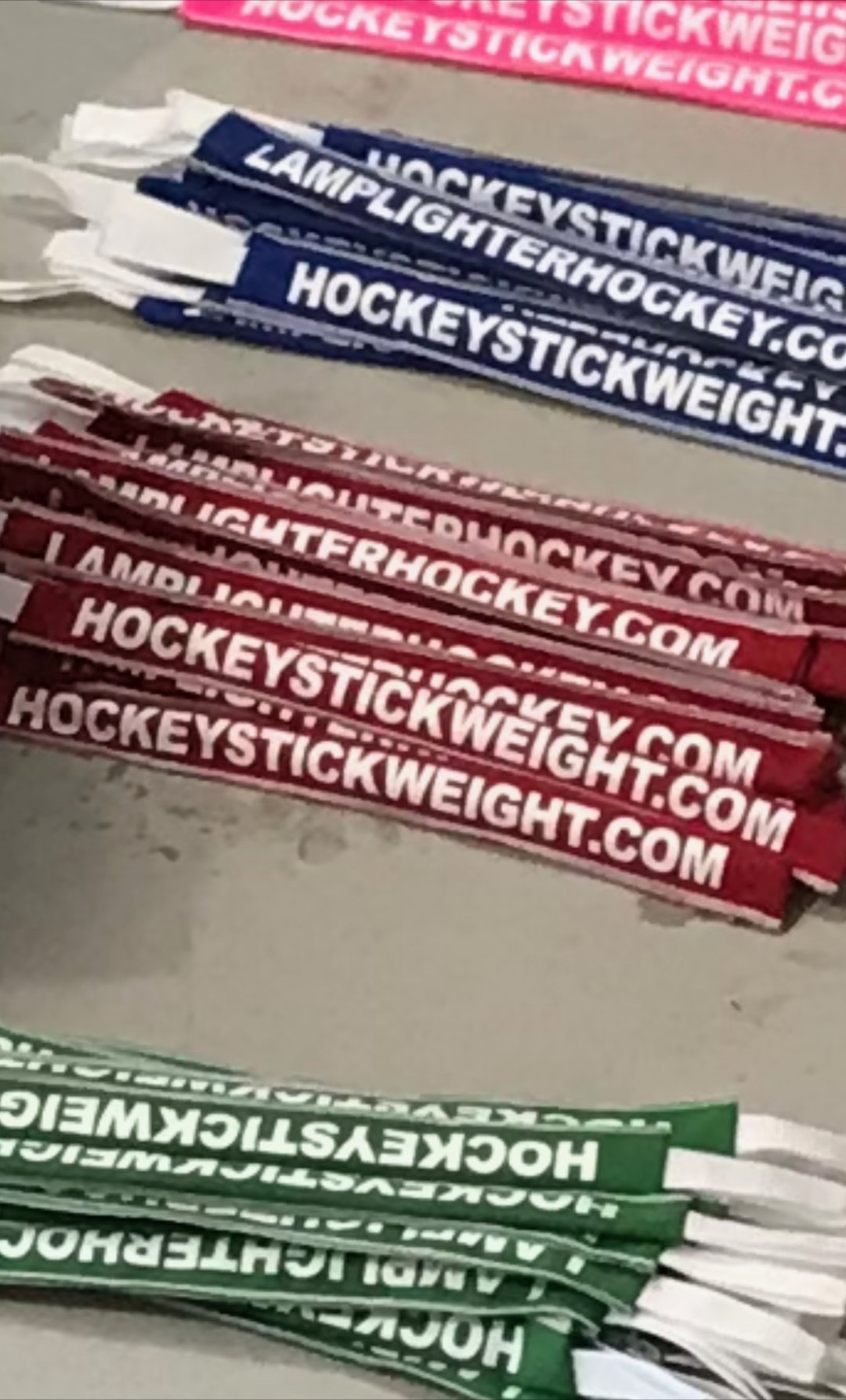
One parent told us the stick weight "greatly improved my son's (age 15) shot since he began training with it," and another shared that their players love using the lighter Minn-E size.
Choosing the right weight for a young player is the difference between training that builds a faster, harder shot and training that builds bad habits.
Frequently Asked Questions
How much should a youth hockey stick weigh?
Most youth composite sticks weigh between 350 and 450 grams depending on the category. Junior sticks typically land around 380 to 430 grams, while intermediate sticks run roughly 400 to 450 grams. A stick that feels too heavy for a young player slows down stick handling and can encourage bad shooting habits. When you add a training weight, the combined load matters more than the bare stick weight, so check both numbers together before buying.
Are stick weights safe for youth hockey players?
Yes, when the weight matches the player's age and strength. Hockey stick weight safety comes down to starting light and progressing slowly. The 1/2 pound size suits 8U and Mite players, the 1 pound size works across all ages, and the 2 pound size is built for stronger players 13 and up. Keep weighted reps short, use them in practice and off-ice sessions rather than games, and watch for fatigue that breaks down shooting form.
Do weighted hockey sticks help players shoot harder?
Weighted hockey stick training adds resistance to your shooting and stick handling reps, which builds wrist, forearm, and upper-body strength over time. Players who train consistently with a stick weight often see gains in shot velocity and puck control, especially when they remove the weight for games. The key is regular practice with good technique, not just extra weight. A customer reported his 15-year-old son's shot improved significantly after training with the Lamplighter stick weight.
Should youth players use a weighted puck or a stick weight?
The weighted puck vs stick weight choice depends on the goal. A weighted puck builds shooting strength through the release and follow-through, while a stick weight adds resistance to every stick handling and shooting motion because it loads the stick itself. For young players working on quick hands and shot power together, a stick weight gives more total reps per session. Many coaches use both, spacing them across different practice days.
How long should a young player train with a weighted hockey stick?
Start with 10 to 15 minute blocks of stick handling and shooting drills, two or three times per week. Younger players at 8U should keep sessions shorter, around 5 to 10 minutes. Remove the weight for games and for any drill where technique starts to break down. Increase time gradually as wrist and forearm strength improves. The Lamplighter weight slides in and out without tape or tools, so switching between weighted and unweighted reps takes seconds.